Monday, October 22, 2012

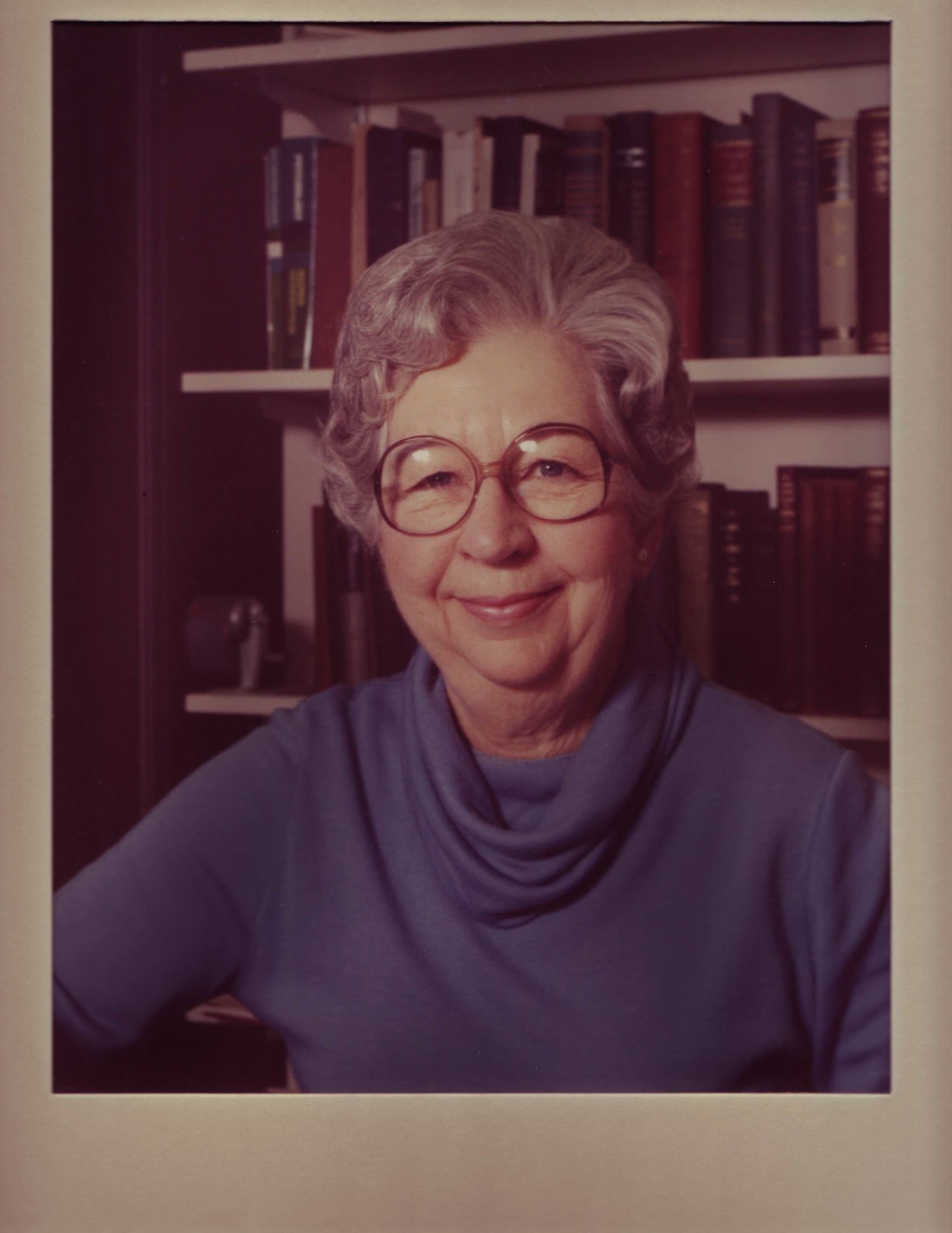
Eleanor J. Gibson


Eleanor J. Gibson


Background

   Eleanor J. Gibson was born on December 7th, 1910 in Peoria, Illinois - the daughter of a businessman father and an unemployed mother. Though Eleanor’s mother didn’t work, she had impressive academic credentials and had studied at Smith College. Following in her mother’s footsteps, Eleanor enrolled at Smith and found herself drawn to psychology courses. Midway through her undergraduate studies, Eleanor met JJ Gibson, a young experimental psychology professor. The relationship that followed had a profound impact on Eleanor’s life, as she attended a master’s degree program supervised by JJ. Midway through, the couple married. 

As Smith College didn’t offer a PhD program, Eleanor attended Yale for her doctoral studies. Gibson’s goal was to conduct research under the supervision of Robert Yerkes, a professor of psychobiology known for his pioneering work in primate behavior and language. Unfortunately, Eleanor was met with the misogynistic viewpoints that permeated higher education at the time. Yerkes, as he claimed, “would have no women in his laboratory”. Determined to continue, Gibson worked under behaviorist Clark Hull and was finally awarded her PhD in 1938.

Work, Contributions & Awards

     With the outbreak of World War II, Eleanor’s husband JJ was contacted by the US Air Force. The government needed his help creating a battery of perceptual tests that could be administered to pilots. Eleanor found herself caring for the couple’s children until the war ended, when her husband was offered a teaching position at Cornell. At the time, the school’s policies dictated that married couples could not be faculty members(due to fears of nepotism), denying Eleanor a position equal to that of her husband. As a research associate, Eleanor ran experiments with military pilots that measured distance judgments. Due to her position, however, she was not given a lab of her own in which to work.

     Eleanor Gibson’s most significant experiment was known as the “visual cliff”. Conducted in 1960, the results shown by the visual cliff study offered new insight into the processes of visual perception. In this experiment, a table was covered with a checkerboard pattern. Attached to this table was a piece of transparent plexiglass with the same checkerboard pattern placed underneath it. Next, babies were placed on the table and allowed to crawl around. Although these children had just learned how to crawl, Gibson noticed that they would consistently avoid crossing from the tablecloth to the plexiglass. Even when their mothers were coaxing them along, the babies refused to walk off of the “edge” - despite having no prior experience with cliffs. This illustrates that humans are capable of basic depth perception by the time they can walk. Further “visual cliff” experiments with babies around 1 year old showed that the children were more likely to walk onto the plexiglass if their mothers had a reassuring, smiling face. By looking for their mother’s expressions, the babies were utilizing “affordances” - information provided by the environment and used to support perception.


An artist's rendition of the "visual cliff" experiment.


After spending nearly two decades in a research associate position, Gibson became a professor at Cornell in 1965. Four years later, she published Principles of Perceptual Learning and Development, outlining her theories of perception with regards to affordances and other characteristics of perceptual learning. Gibson’s book helped flesh out the relatively young field of perceptual development and was considered a classic.  Later on in life, Gibson also published An Odyssey in Learning Perception, amongst other works.  The scientific community recognized Eleanor’s achievements by awarding her the G. Stanley Hall Award, the American Psychological Foundation Gold award for lifetime achievement, as well as the prestigious National Medal of Science(an honor that few psychologists have ever earned). At the time of her death in 2002, Eleanor Gibson’s work had left a mark on not only the study of perception but on psychology as a discipline.


Significance

Though Eleanor Gibson lived a life characterized by great success, she was also subjected to the androcentric, anti-feminine ideals common in the scientific fields. Her outright dismissal by Robert Yerkes is indicative of the sentiment shared by many at the time - that women had no place in scientific research. Though Gibson was able to obtain a doctorate degree, she was forced to study under a vocal supporter of behaviorism - a theory that she did not subscribe to. A man in Eleanor’s position, however, would not have faced such scrutiny and most likely would have been free to pursue research as he saw fit.

This discrimination also extended to Gibson’s career at Cornell, where she occupied a lower position than her husband simply because they were married. Though Eleanor was denied a lab to work in, her research projects(even the famous visual cliff experiment)were all designed to compensate for these shortcomings. Eleanor not only persevered in the face of the obstacles created by gender, but flourished - making her groundbreaking strides in perceptual development even more impressive.


Cited sources:

http://www.apa.org/monitor/2011/07-08/gibson.aspx
http://www.feministvoices.com/eleanor-j-gibson/
http://www.britannica.com/EBchecked/topic/233281/Eleanor-J-Gibson
Goldstein, Bruce E. "Sensation and Perception - 7th Edition". Thomson; 2007.

Image citations:

http://www.feministvoices.com/eleanor-j-gibson/
http://gynomite.wordpress.com/2009/09/25/lets-learn-a-little-psychology-101/

Posted by Miles Kilgour.
October 22, 2012


Tuesday, October 16, 2012

Maria Montessori


Maria Montessori


"We discovered that education is not something which the teacher does, but that it is a natural process which develops spontaneously in the human being." -Maria Montessori 

Background

On August 31st, 1870, Maria Montessori was born to Alessandro Montessori and Renilde Stoppani. She would begin her amazing life as a Roman Catholic Italian woman in Chiaravalle, Italy. From an early age, Maria excelled in the classroom. Like her mother, and unlike many other women in her time, she would become well-educated. At age 13, Maria was enrolled into a technical school. After graduation in 1886, she went on to enter the Regio Instituto Technico Leonardo da Vinci. There, she studied math, natural sciences, and languages. At this institute, she discovered a strong desire to pursue a career in medicine. When she applied for the medical program at the University of Rome in 1890, she was denied. She did not give up, but instead went on to study physics, mathematics, and natural sciences at the university. After two years of studying she received her Diploma di Licenza. As time went on, she became able to enter the medical program at the University of Rome. She presented her thesis in 1986, and was awarded her full medical degree. Maria Montessori became the first female doctor in Italy.


Career


Maria Montessori began her career after medical school as a medical assistant at Santo Spirito. She was then given a promotion as a surgical assistant. In 1897, she joined the staff at the University of Rome where she continued doing research after receiving a full medical degree. In 1904, she became a professor at the university. Soon after, she decided that she would begin the process which would deem her an extraordinary woman to this day. Maria Montessori founded a whole new approach to teaching children. By embracing a child’s natural desire to learn, a Montessori way of teaching allows a child to embrace the desire to learn in a hands-off environment. This way of learning allows the teacher to step down from the pedestal and understand the benefits of a child exploring their own skills and teaching themselves. Maria Montessori questioned the validity of a teacher providing lectures, and promoted a teacher stepping back and helping children help themselves in order to thrive within the classroom and throughout their lives.  Maria Montessori revolutionized education in a way that would have lasting effects seen in today’s society.


Relevance


Maria Montessori took an inspirational leap for all women. Through her development of a this revolutionary way of teaching, Maria has proven that hard work can have lasting effects on society whether it comes from a man or a woman. Maria persisted through her education, and did not give up when she was denied a fair chance at an education because of the fact that she was a woman. Her efforts can be found right here in New Paltz, New York at the Montessori of New Paltz located on Plains Road.


References

https://www.amshq.org/Montessori%20Education.aspx
http://www.montessoriofnewpaltz.com/montessoriofnewpaltz.com/Welcome.html
http://www.nndb.com/people/189/000108862/

Sunday, October 14, 2012

Leona Tyler


Leona Tyler


Background
            Leona Tyler was born May 10, 1906 in Chetek, Wisconsin. Born into a typical family of the time, Leona’s father, Leon, worked outside of the home as an accountant and house restoration contractor while her mother, Bessie, stayed at home and cared for the family. Leona was one of four children, all of whom were boys except for Leona. After women received the right to vote, Bessie believed that it was a concrete sign that men and women were equal, and treated Leona as such in comparison to her brothers. Bessie’s beliefs about the equality between the sexes were the influence Leona needed for her moral principles that led her into psychological work.

Education
            Leona graduated high school at the age of fifteen, and soon after received her Bachelor of the Arts degree in English from the University of Minnesota (at age 19).  Despite her major being English, Leona was also very interested in the field of science. This led her to complete her Ph. D. in psychology, which was obtained from the University of Minnesota in 1940, at the age of 34.

Professional Life and Work
            Leona became a professor at the University of Oregon in 1940. Soon after, she joined the university’s department of psychology. In 1941, Leona took it upon herself to organize a counseling service for the veterans of World War II. Years later, this service she created became the official counseling center at the University of Oregon. Leona then published her first book titled “The Psychology of Human Differences” in 1947. This book outlined the psychological differences that Leona felt existed in people, and was heavily influenced by her writing and counseling which led her to reevaluate her ideas about human nature. In “The Psychology of Human Differences,” Leona blended the ideas of Carl Rogers, psychoanalytic theory, and existentialism to create her own view of behavior.   In 1965, she became the Dean of Graduate School and remained in that position until she retired at the age of 65 in 1971. Between the years of 1967 and 1968, Leona wrote alongside Florence Goodenough on the latest revision of “Developmental Psychology.” After this, in 1969, Leona wrote another book titled “The Work of the Counselor.” Right around the time this book was written, Leona switched her ideas from behavioristic to cognitive, which is seen throughout the book. The book also includes work from her longitudinal study that looked at why people made certain decisions about their direction and development, mainly as people thought about careers. Leona Tyler is also known for her creation of the Choice Pattern Technique. This technique explored the differences that are present within people across different cultures with respect to a person’s individual choice. Subjects would be given a pile of cards with occupations, and then they would have to sort them into piles based on their interest or disinterest. After this, Leona would study the reasons behind why the subjects would sort the cards in a specific way. This technique allowed her to study the differences between people and the choices they make, not only with occupations but with other choices as well. Lastly, Tyler coined the idea of the “Theory of Possibilities.” This basically said that during development there are many possibilities for a person to become or choose, and these possibilities eventually turn into a limited number of actualities, all by the choice of the individual. As a result of this, some opportunities are missed. However, despite some opportunities being missed, the person will be able to have some of their potentials actualized, whether consciously or unconsciously, leading them to be a developed person. Leona Tyler conducted research, performed counseling, and wrote books and articles (totaling over 100) that continue to influence psychology today.

Organizational Involvement
  • ·      President of the Western Psychological Association
  • ·      The American Psychological Association (Division 17, Counseling Psychology) named their highest award after her
  • ·      During the Mid 1960s, elected to the American Psychological Association board of directors
  • ·      Appointed the dean of the University of Oregon in 1965 (Graduate School)
  • ·      Elected the president of the American Psychological Association in 1972, becoming the 4th women to be elected to this position and the 81st president


Death
            Leona Tyler died at the age of 86 in Eugene, Oregon. Her cause of death was heart failure due to a series of unfortunate illnesses and accidents.

Relevance to Class Materials
            Much of Leona Tyler’s work focused on the individual differences that exist between people, specifically in reference to decision making about career choices. This can be studied between cultures, and more importantly to our class, genders. We could use her Choice Pattern Technique to study the differences that exist in the choices that females make verses males, and then use that to see what differences exist between the genders. This can also be used to study patterns of decision making between females of different cultures, and to get an idea of choices that certain girls make while other girls do not. In addition, Leona Tyler did much work on counseling. Counseling applies to every field of psychology and is used heavily today in the world. Leona redefined the definition of counseling, separating it completely from the idea of psychotherapy. To Leona, counseling was a means of encouraging natural developmental processes while exploring the differences between individuals and their experiences with decision making and choices. Through this method of counseling, the differences between men and women can be studied. As a woman, Leona Tyler was appointed to many positions, some that women rarely inhabited, such as the president of the American Psychological Association. Since this is a woman’s studies class, I feel that it is important to note her accomplishments as a female in her time. Overall, Leona’s work on decision-making, counseling, and individual differences can be applied to the study of women as well as people and society as a whole.

References

Tuesday, October 9, 2012

Janet Taylor Spence


Janet Taylor Spence
Background
Janet Taylor Spence was born on August 29, 1923 in Toledo, Ohio as the eldest of two daughters.  She is the daughter of John and Helen Taylor.  John Taylor was a Canadian soldier and after being wounded he became a reporter in New York.  In New York he met Janet’s mother, who had received her undergraduate degree from Vassar College, her Master’s degree in economics from Columbia University, and eventually earned her Master’s degree in social work.  Both of Janet’s parents were very active in the community. Her father ran for governor and was elected to the school board.  Her mother worked with the League of Women Voters, ran Republican election campaigns, and was the director of a social service agency that gave aid to women and children.  Her parents’ work with the community during the Depression inspired Janet to become a psychologist. She went to an all girls’ high school in Northfield, Massachusetts and began her study of psychology at Oberlin College where she earned her undergraduate degree in 1945. She went to Yale for her graduate degree, but then transferred to the University of Iowa.  However, she met her future husband, Kenneth Spence, the co-author of the Hull-Spence theory of behavior, at Yale.  She received her Master’s degree from the University in Iowa as well as her PhD. She then married Kenneth Spence in 1960.  
Professional Life and Work
Janet became an instructor at Northwestern University and worked as an associate professor until 1960.  In fact, she was Northwestern University’s first female faculty member, but this accomplishment was underscored by the fact that the chair thought, “having a woman on the faculty was a novel and interesting idea."  She received few opportunities for promotion and some were opposed to her receiving the position.  When she worked at Northwestern University she taught statistics and authored textbooks. She then moved to Iowa and worked as a research psychologist in a veterans’ hospital. She began her research on anxiety with her husband and tried to determine if anxiety was a dispositional trait.  In order to measure anxiety she created the Taylor Manifest Anxiety Scale in 1953.  The scale consisted of fifty questions and it is what she is most known for.  She also studied how anxiety affects performance.  In addition, she studied reinforcement and motivation.  She first did her research with schizophrenics and she then conducted her research on children.  She found that rewards were counterproductive and that performance was caused by intrinsic motivation.  She then focused her research on gender.   She studied the likeably of competency of women.  This study used the Attitudes Toward Women Scale and showed that even, “conservative subjects not only preferred more competent to less competent women but rated highest the woman who was competent in stereotypically masculine areas.”   When considering gender identity she believed that a multidimensional view was needed and that each dimension was unique. In 1970 she became a member of the Board of Scientific Affairs for the American Psychological Association and became the sixth female president of the association.  She was also the president of the Southwestern Psychological Association and the editor of Contemporary Psychology.  In 1989 Janet became the founding president of the American Psychological Society. 
Relevance to Class Materials
Janet found that rewards are actually counterproductive and that behavior is caused by an individual’s motivation.  However, this is contrary to the idea that children learn their gender roles through being rewarded for behaving in ways that are most commonly associated with gender and in ways that are stereotypically appropriate for their gender.  However, she also believed that a multidimensional view on gender was needed.  This notion is shown in the research of the differences between males and females in “Female-Male Comparisons: The Meaning and Significance of Difference.” The research measured differences in aggression and cognitive abilities such as verbal, quantitive, and visual-spatial abilities.  
  
Posted by Cheyanne Mazzacone


Mildred Mitchell-Bateman


Personal Background:

Mildred Mitchell-Bateman was born on March 22nd, 1922 in Brunswick, Georgia as the daughter of a minister and a registered nurse. She died January 25th, 2012. Her career in assisting society began at age 12, when a tornado ran its course through her hometown. She immediately volunteered alongside the Red Cross and assisted in taking care of survivors.

Education and Contributions to Psychology:

Mitchell-Bateman first went to college at Barber-Scotia College, North Carolina from 1937 until 1939 and then went to graduate at Johnson C. Smith University in North Carolina for her bachelor’s degree in 1941. She later went on to get her medical degree at the Women’s College of Pennsylvania in 1946. It was soon after this that she began an internship and got a job as a staff physician at Lakin State Hospital, serving black patients. On December 25, 1947 she married William L. Bateman, a fellow therapist at Lakin.  It was not until she wanted to begin her own practice that she left Lakin and instead headed for Meningers School of Psychiatry in Topeka, Kansas. After three years of this, Mitchell-Bateman returned to Lakin as the Clinical Director in 1955. She remained in this position until she was promoted to superintendent of the hospital. Then, she was promoted again in 1960 to supervisor of professional services for the state Department of Mental Health. It was here that Mitchell-Bateman developed her relationship with various psychiatric facilities, learning the ins and outs of what the state had to offer. In July 1962, the department’s director Charles A. Zeller passed away, allowing Mitchell-Bateman to be appointed as acting director until she was officially named director on December 17th, making her the first African-American woman to lead a West Virginia state agency.

Mildred Mitchell-Bateman advocated for placing mentally ill patients at facilities nearest their homes and developing community mental health centers. She developed a program entitled “Breaking the Disability Cycle,” which gave hope to patients who had been previously characterized as untreatable. She believed that there was no reason to simply give up on a patient. In 1973, she became the first black woman to serve as vice president of the American Psychiatric Association. Four years later, she was named one of four psychiatrics to President Jimmy Carter’s Commission on Mental Health. This resulted in the Mental Health Systems Act in 1980. In 1977, Mitchell-Bateman resigned as director after the Department of Mental Health was merged into the much larger Department of Health. She instead became chair of the Psychiatric Department of Marshall University’s medical school. After this she was named clinical director of Huntington State Hospital. Later on, the hospital was renamed in her honor in 1999. She continued to serve on the hospital board until her death in 2012 in Charleston, South Carolina.

Awards:

Mildred Mitchell-Bateman received many honors and awards for her accomplishments. She was given special recognition from the National Medication Association Section on Psychiatry and Neurology in 1974, got the E.Y. Williams Distinguished Clinical Scholar’s Award for community work, and in 2000, she received a lifetime achievement award at the West Virginia District Branch of the American Psychiatric Association. She also received another honor in 2004 with the Governor’s Award for Civil Rights Contribution to the State of West Virginia. There was once little hope for those diagnosed with mental disorders, but with all that Mildred Mitchell-Bateman did, there is now a real chance at life and health for patients.

References:

Bickley, Ancella R. "Share Mildred Mitchell-Bateman." E-WV. N.p., 20 Oct. 2010. Web. Oct. 2012. <http://www.wvencyclopedia.org/articles/2003>.

"Biography - Mildred Mitchell-Bateman, M.D." U.S National Library of Medicine. U.S. National Library of Medicine, n.d. Web. Oct. 2012. <http://www.nlm.nih.gov/locallegends/Biographies/Mitchell_Bateman_Mildred.html>.

"MMBH Mildred Mitchell-Bateman Bateman, M.D. Bio." MMBH Mildred Mitchell-Bateman Bateman, M.D. Bio. N.p., n.d. Web. Oct. 2012. <http://batemanhospital.org/wp_mb_mmb_md.htm>.

carolyn robertson payton


Carolyn Robertson Payton

May 13, 1925 - April 11, 2001
 

Background
Carolyn Robertson Payton is often remembered as the first women and first African American Director of the United Sates Peace Corps, a volunteer program sponsored by the United States Government. She was given this position in the 1960s, a time in which both women and African Americans lacked opportunities. She is best known for her work for and to the psychology of minorities.
Carolyn Robertson Payton was born on May 13, 1925 in Norfolk, Virginia. Payton had rich family background; she was a granddaughter of both a former slave and of African royalty. Growing up during the depression, Payton’s parents provided her and her sibling with adequate food and clothing because of their qualifying jobs. Her mother was a seamstress and her father was a chef. Although not seemingly harmed with the hard times of the depression, Payton still suffered the hardships of racism. This was a time in which racism was fully alive, and Payton knew and was a ware of certain rights she was being deprived of.
Payton went on to gain higher education at Bennett College in North Carolina, a historically Black women's college. It was during her time at Bennett College, that African American women could obtain and succeed in major leadership roles. Payton went on to gain her M.S. degree in clinical psychology at the University of Wisconsin-Madison with the state of Virginia covering her expenses under the "separate-but-equal" doctrine.
During her time at the University of Wisconsin-Madison, she worked on her thesis that was based on the test of intelligence that measured the intelligence of Blacks, proving that there was no difference in intelligence between the races. Upon graduation Payton became a psychologist in several colleges, and continued her pursuit of higher education gained her PhD at Colombia University in 1959 and her doctoral degree in 1962.
Work In Psychology
While working in Howard University in Washington, D.C. as an assistant professor position she received the recommendation from the university, to become a field assessment officer (FAO) for the Peace Corps served a position in Togo, West Africa where she was responsible for preparing trainees. This involvement led to a full-time position in the Peace Corps and in 1966 she was appointed as deputy director and then director for the Caribbean region. At the time there were very few women in such a high ranked position, and was only one of two female country directors for the peace corps.
The position that Payton held became as a mark of success and influential for women and demonstrated that women could fill such high positions. Payton was a heavily involved individual; she was a member of the American Psychological Association (APA) for over 40 years. She made many contributions. Along with the APA, she worked with many underrepresented groups such as women, minorities, lesbians, and gays.
For her many accomplishments Payton has received numerous awards through the APA such as Distinguished Professional Contributions to Public Service Award, the distinguished Leader for Women in Psychology Award, and the award for Outstanding Lifetime Contributions to Psychology.
  On April 11, 2001, Carolyn Robertson Payton died in her home in Washington, DC. She was 75 years old at the time of her death. Payton continues to be a leader in many ways than one, with her success in overcoming gender and racial barriers.


References:
http://www.webster.edu/~woolflm/payton.html
http://www.psych.yorku.ca/femhop/Carolyn%20Robertson%20Payton.htm
http://www.feministvoices.com/carolyn-robertson-payton/


Marlene De La Rosa
Melanie Hill
PSY 350